


Wound Care
Chronic wounds are wounds that fail to heal within the expected timeframe despite appropriate care. When poor circulation is the underlying cause, standard wound care alone is rarely enough. Learn about the types of chronic ischemic wounds, why they develop, how they are managed, and the investigational clinical research being studied for patients who have run out of conventional options.
Chronic Wounds:
What They Are and Why They Matter
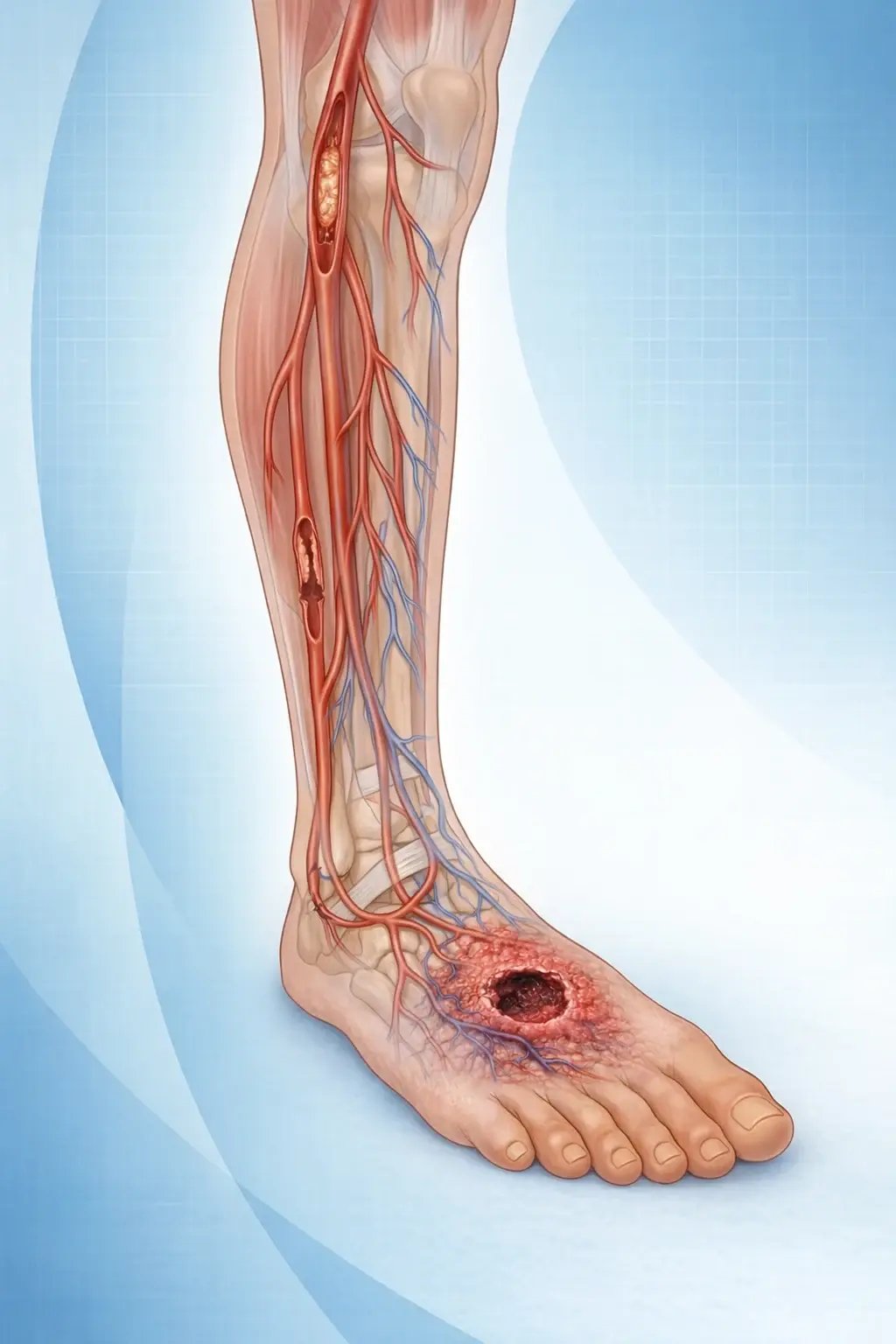
A chronic wound is any wound that fails to progress through the normal stages of healing within four to twelve weeks. Most wounds follow a predictable path: they bleed, they clot, they rebuild tissue, and they close. A chronic wound stalls somewhere in that process and stays stuck, sometimes for months, sometimes for years.
Chronic wounds are far more common than most people realize. They affect millions of people worldwide and are one of the most costly and undertreated conditions in modern healthcare. They are most frequently seen in people with diabetes, peripheral arterial disease, venous insufficiency, or a history of limited mobility. What these conditions share is a compromised vascular system that cannot reliably deliver the oxygen and nutrients tissue needs to repair itself.
For patients with ischemia, meaning reduced blood flow caused by narrowed or blocked arteries, a wound that will not heal is not a wound care problem. It is a circulation problem. Dressings, debridement, and offloading can manage the wound surface and reduce infection risk, but they cannot restore the blood flow that healing requires. Until that underlying deficit is addressed, the wound remains biologically unable to close.
Understanding what type of chronic wound you have, why it developed, and what your options are puts you in a far stronger position to advocate for the right care and explore every pathway available to you.
Symptoms and the Lived Experience of
Chronic Wounds
Chronic wounds have a way of creeping into every part of daily life. What often starts as a small sore or a cut that seems slow to close gradually becomes something that dominates the day. Dressing changes, wound checks, appointments, careful steps, and constant vigilance. For many patients, the wound itself becomes a second job.
The experience varies depending on the underlying cause, but some patterns show up consistently across patients living with chronic ischemic wounds.
A wound, sore, or ulcer that has been present for four weeks or more without meaningful improvement
Surrounding skin that appears red, darkened, shiny, or feels warm or hardened to the touch
Drainage from the wound that is increasing in volume or changing in color or odor
Pain at the wound site that is present even without pressure or activity
Feet or legs that feel cold, numb, or noticeably cooler than the rest of the body
Skin on the lower leg or foot that has thinned, discolored, or developed a leathery texture
Toenails that grow slowly or have thickened and changed in appearance
A wound that appeared to be improving and then stalled or worsened without explanation
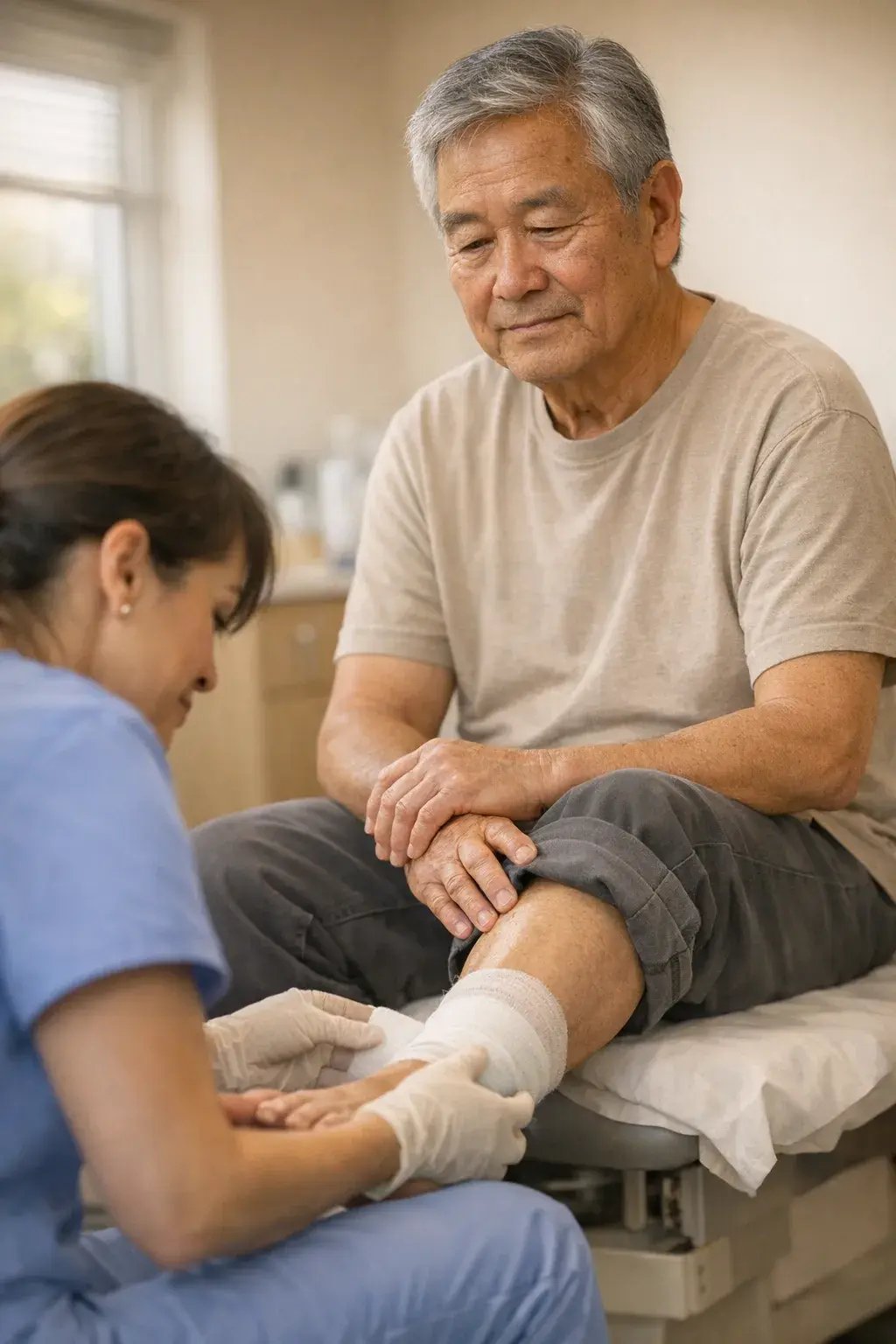
If any of these symptoms are present and the wound has not shown consistent improvement with standard care, further evaluation is warranted. Chronic wounds driven by poor circulation do not resolve on their own. The sooner the underlying vascular cause is identified, the more options remain available.
Symptoms and the Lived Experience of Chronic Wounds
Chronic wounds have a way of creeping into every part of daily life. What often starts as a small sore or a cut that seems slow to close gradually becomes something that dominates the day. Dressing changes, wound checks, appointments, careful steps, and constant vigilance. For many patients, the wound itself becomes a second job.
The experience varies depending on the underlying cause, but some patterns show up consistently across patients living with chronic ischemic wounds.
-
A wound, sore, or ulcer that has been present for four weeks or more without meaningful improvement
-
Surrounding skin that appears red, darkened, shiny, or feels warm or hardened to the touch
-
Drainage from the wound that is increasing in volume or changing in color or odor
-
Pain at the wound site that is present even without pressure or activity
-
Feet or legs that feel cold, numb, or noticeably cooler than the rest of the body
-
Skin on the lower leg or foot that has thinned, discolored, or developed a leathery texture
-
Toenails that grow slowly or have thickened and changed in appearance
-
A wound that appeared to be improving and then stalled or worsened without explanation
If any of these symptoms are present and the wound has not shown consistent improvement with standard care, further evaluation is warranted. Chronic wounds driven by poor circulation do not resolve on their own. The sooner the underlying vascular cause is identified, the more options remain available.
Why Chronic Wounds Happen
Chronic wounds rarely develop out of nowhere. They are almost always the result of an underlying condition that has been quietly compromising the body's ability to maintain and repair tissue over time. Understanding what is driving the wound is what makes it possible to treat it effectively rather than just managing the surface indefinitely.
Peripheral Arterial Disease
PAD is one of the most common underlying causes of chronic ischemic wounds. When the arteries supplying the legs and feet become narrowed or blocked by plaque buildup, the tissue downstream is starved of oxygen. Wounds that develop in this environment have no biological pathway to heal because the raw materials healing requires simply cannot get through.
Diabetes
Diabetes damages blood vessels and nerves simultaneously. The vascular damage reduces circulation to the extremities, while nerve damage means patients often cannot feel a wound forming until it is already established. Combined with impaired immune response and slower cellular repair, diabetes creates conditions where even a minor foot injury can become a serious non-healing wound.
Venous Insufficiency
When the veins in the legs cannot efficiently return blood to the heart, fluid builds up in the lower leg. Chronic venous hypertension damages the surrounding tissue over time, making the skin fragile, prone to breakdown, and slow to recover when a wound does develop.
Chronic Limb-Threatening Ischemia
CLTI represents the most advanced stage of peripheral arterial disease, where blood flow to the limb has dropped to a critical level. At this stage, wounds are not just slow to heal. They are biologically unable to heal without intervention that restores perfusion. CLTI-related wounds carry the highest risk of infection, tissue loss, and amputation.
Immobility and Pressure
Patients with limited mobility are at elevated risk of pressure injuries, localized damage caused by sustained compression over bony areas. In patients who also have vascular compromise, the combination dramatically increases both the likelihood of a wound developing and the difficulty of getting it to close.
A Pattern Worth Recognizing
Many patients living with chronic wounds have more than one of these contributing factors simultaneously. Diabetes and PAD frequently coexist. Venous insufficiency and reduced mobility often appear together. When multiple systems are compromised at once, the wound becomes harder to treat and the urgency of identifying the right approach increases.
Types of Chronic Wounds
Chronic wounds are not all the same. The type of wound a patient has reflects the underlying cause, and that distinction matters because it directly shapes what treatment approaches are appropriate and what options remain when standard care stops working.
Diabetic Foot Ulcers
Open sores that develop on the feet of people with diabetes, most often on pressure points like the ball of the foot, the heel, or the tips of the toes. They are caused by a combination of nerve damage, which removes the pain signal that would normally prompt someone to address a developing wound, and poor circulation, which prevents the tissue from repairing itself. Diabetic foot ulcers are the leading cause of non-traumatic lower limb amputation worldwide.
Arterial Ulcers
Wounds caused directly by insufficient blood flow through narrowed or blocked arteries. They typically appear on the lower leg, foot, or toes and tend to have a pale, punched-out appearance with minimal drainage. They are often painful, particularly at night or when the leg is elevated. Arterial ulcers will not heal without improved circulation to the affected area. Wound care alone cannot close them.
Venous Leg Ulcers
The most common type of chronic leg wound. Caused by venous insufficiency and sustained elevated pressure in the lower leg veins, they typically develop on the inner lower leg above the ankle. The surrounding skin is often discolored, thickened, and fragile. Venous ulcers can be managed with compression therapy in appropriate patients, but when arterial disease is also present that approach requires careful assessment before it can be used safely.
Mixed Arteriovenous Ulcers
A combination of both arterial and venous disease in the same limb. These wounds are more complex to manage because the two conditions require different and sometimes conflicting treatment approaches. Compression, which is standard for venous ulcers, can be harmful if arterial flow is significantly impaired. Accurate diagnosis is essential before any treatment plan is implemented.
Pressure Injuries
Localized damage to skin and underlying tissue caused by sustained pressure, typically over a bony prominence such as the heel, ankle, or sacrum. In patients who also have vascular disease, even brief periods of pressure can cause significant injury because the tissue is already operating with reduced oxygen delivery and limited repair capacity.
Ischemic Wounds Following Failed Revascularization
Some patients develop or retain chronic wounds after bypass surgery or endovascular procedures that did not achieve durable results. When revascularization fails or is no longer technically feasible, the wound loses its most viable pathway to healing and the patient enters no-option territory. This is one of the populations investigational research is specifically designed to serve.
How Chronic Wounds Are Assessed and Diagnosed
Effectively treating a chronic wound requires understanding what is driving it. A wound that looks manageable on the surface may have a vascular deficit underneath that standard wound care will never resolve. Accurate assessment is what separates a treatment plan that addresses the root cause from one that only manages symptoms indefinitely.
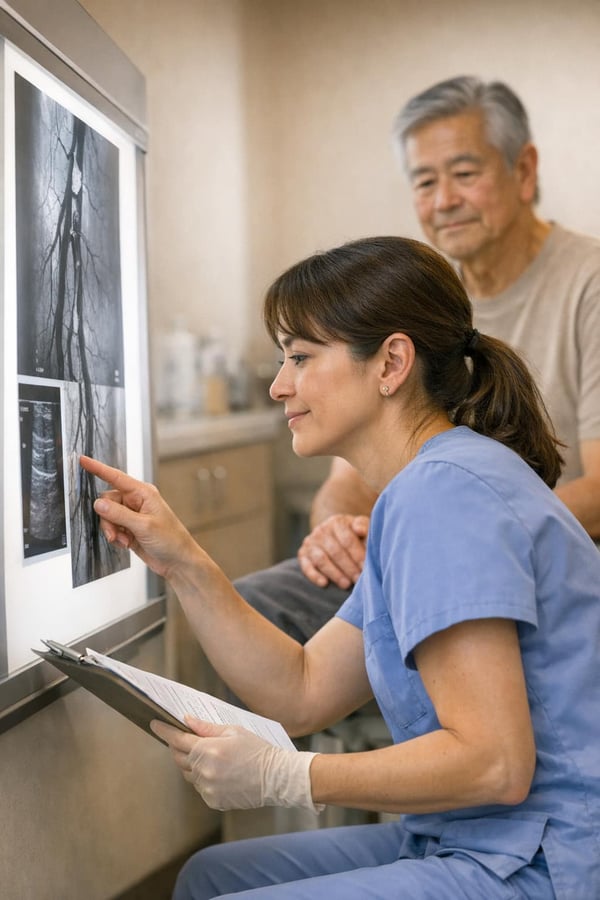
Wound History and Clinical Review
The process begins with a detailed conversation about symptoms, their pattern, and how they have changed over time -- including rest pain, wound history, prior interventions, and how daily life has been affected. This context is essential for understanding severity and identifying patients who may no longer be candidates for standard revascularization.
Ankle-Brachial Index (ABI)
A non-invasive test that compares blood pressure at the ankle to blood pressure at the arm. A reduced ratio indicates impaired arterial flow to the lower extremity. The ABI is frequently the first test that identifies a vascular component in a wound that has not been healing as expected.
Toe-Brachial Index (TBI)
In patients with diabetes or heavily calcified vessels, the ABI can produce falsely normal readings. Toe pressure measurements provide a more accurate picture of blood flow in the distal foot and are essential for avoiding missed diagnoses in patients whose vascular disease may not show up clearly on standard testing.
Duplex Ultrasonography
Uses sound waves to visualize blood flow patterns and identify the location and severity of arterial narrowing or blockage. Non-invasive and widely available, duplex ultrasound is often used after an abnormal ABI to map the distribution of disease and guide decisions about whether and how revascularization might be possible.
CT or MR Angiography
Provides detailed anatomical imaging of the arterial system from the aorta to the foot. Essential for understanding the full extent of disease and determining whether any revascularization options remain technically feasible. For patients who have already had procedures, imaging helps clarify what has changed and what options, if any, are still on the table.
Wound Tissue Assessment
In addition to vascular testing, chronic wounds require direct assessment of the wound bed itself, including the depth of tissue involvement, the presence of infection, the viability of surrounding tissue, and whether the wound is showing any signs of biological activity. This assessment shapes wound care decisions and helps determine the urgency of intervention.
Microbiology and Infection Workup
Chronic wounds are vulnerable to infection, and infection significantly slows or reverses healing. Cultures and sensitivity testing identify which organisms are present and guide antibiotic selection when infection is confirmed. In patients with diabetes, bone involvement through osteomyelitis is an important consideration that requires specific imaging to rule out.
How Chronic Wounds Progress Over Time
Chronic wounds do not stay static. Without intervention that addresses the underlying cause, they tend to worsen. Understanding the trajectory of an ischemic wound helps patients and caregivers recognize where they are in that progression and why acting sooner rather than later matters.
Stage 1: A Wound That Is Slow to Close
A wound develops and does not follow the expected healing timeline. It may appear stable, neither obviously worsening nor making meaningful progress. At this stage the wound is often manageable with standard care and patients may not yet be alarmed. But a wound that is not progressing after four weeks is already signaling that something is interfering with the healing process.
Stage 2: Stalled Healing Despite Appropriate Care
Standard wound care protocols are in place. Dressings are changed, the wound is kept clean, offloading or compression is being used where appropriate. And the wound still does not close. This is the stage where the gap between surface management and underlying vascular deficit becomes impossible to ignore. The wound is being cared for correctly and it is still not healing.
Stage 3: Wound Deterioration and Expanding Tissue Involvement
The wound begins to grow. The wound bed darkens or develops areas of poor tissue quality. Surrounding skin becomes increasingly fragile or breaks down. Drainage increases or changes character. The depth of the wound extends into underlying tissue. Infection becomes a recurring or persistent concern. Daily life narrows further around the demands of wound management.
Stage 4: Infection, Tissue Loss, and Systemic Risk
Bacteria establish themselves in the wound and begin to spread. Cellulitis develops in the surrounding tissue. In patients with diabetes or severely compromised circulation, infection can progress rapidly to involve deeper structures including tendons and bone. Systemic signs of infection may appear. The risk of sepsis increases. At this stage the wound is no longer just a wound. It is a threat to the limb and potentially to the patient's life.
Stage 5: Limb-Threatening Ischemia and Amputation Risk
Tissue oxygen levels have dropped below the threshold required to sustain viability. Gangrene may develop in the toes or forefoot. The conversation shifts from healing the wound to whether the limb can be saved at all. Patients who reach this stage without revascularization options face the highest risk of major amputation. This is also the stage where investigational evaluation becomes most urgent, because the window for meaningful intervention is narrowing.
Current Treatment for Chronic Wounds
Treatment for chronic wounds focuses on managing the wound surface, reducing infection risk, addressing contributing medical conditions, and where possible restoring the blood flow that healing requires. The right approach depends on the type of wound, the severity of the underlying vascular disease, and the overall health of the patient. Most people with chronic ischemic wounds move through a combination of these approaches over time.
Wound Bed Preparation and Debridement
Removing dead or damaged tissue reduces bacterial load, stimulates the wound edges, and allows clinicians to accurately assess the true depth and condition of the wound. It can be performed surgically, mechanically, enzymatically, or through specialized dressings depending on the wound and patient.
Advanced Wound Dressings
Modern dressings maintain a moist healing environment, absorb drainage, deliver antimicrobial agents, or reduce biofilm depending on the wound. Selection is matched to the wound at each stage and adjusted as conditions change. No dressing can compensate for absent blood flow.
Offloading and Compression
For diabetic foot ulcers and pressure injuries, removing mechanical stress through total contact casting or specialized footwear allows tissue to begin recovering. For venous leg ulcers without significant arterial compromise, graduated compression reduces venous hypertension and supports healing. Compression must not be used when arterial disease is present without careful hemodynamic assessment first.
Infection Management
Chronic wounds are persistently vulnerable to infection. When infection is present, targeted antibiotic therapy guided by wound cultures is required. Deep tissue or bone involvement may require surgical debridement and prolonged antibiotic courses. Controlling infection is a prerequisite for any healing progress.
Endovascular Intervention and Surgical Bypass
When the wound has a vascular component and anatomy is suitable, restoring blood flow through angioplasty, stenting, or bypass surgery gives the wound its best chance of healing. Revascularization is the most impactful intervention available for ischemic wounds when it is technically feasible.
Hyperbaric Oxygen Therapy
In selected patients, breathing pure oxygen in a pressurized chamber can increase oxygen delivery to ischemic tissue. Used as an adjunct in some diabetic foot ulcer cases, it is not appropriate for all wound types or patient profiles and is not widely available.
Some patients do everything right and the wound still does not heal. Arteries that cannot be opened. Grafts that have failed. Disease that has spread beyond what any procedure can reach. When a vascular specialist confirms that no further conventional intervention is possible, standard treatment has reached its limit. That is not the end of the conversation. It is the beginning of a different one.
When Patients Explore Investigational Options
For some patients with chronic wounds, the disease reaches a point where standard interventions can no longer keep pace. Wounds that were responding begin to stall again. Revascularization procedures that restored flow temporarily stop working. New blockages develop in vessels that have already been treated. Disease spreads to areas that cannot be safely reached by any procedure. And the wound remains open.
When a vascular specialist or wound care clinician says there is nothing left to offer, it is one of the most devastating things a patient can hear. Especially after months or years of doing everything asked of them. Especially when the wound is still there. Especially when amputation is beginning to enter the conversation.
That is exactly the patient population that investigational clinical research is designed for.
Why Patients Begin Looking Further
Patients with chronic ischemic wounds may explore investigational options when wounds have persisted for months despite appropriate care and vascular intervention; revascularization has been attempted but results have not held; imaging confirms disease that is too diffuse or too advanced for further procedures; a vascular specialist has indicated that no additional intervention is possible; or amputation is being presented as the next and only remaining step.
This is not giving up. It is looking further. Many patients describe a combination of exhaustion, determination, and a refusal to accept an outcome that feels premature. They have followed every protocol. They have attended every appointment. They have done the dressing changes at midnight and the wound care routines that take over the morning. And the wound has continued anyway. Seeking investigational evaluation is an informed decision made by people who are not finished fighting for their limb.
What Investigational Evaluation Involves
Investigational evaluation is a structured clinical review conducted under regulated research protocols. It begins with a thorough assessment of medical history, prior imaging, current wound status, and vascular findings to determine whether a patient meets the eligibility criteria for a research study.

Hemostemix evaluates certain patients with chronic ischemic wounds under investigational protocols involving ACP-01, an autologous cell therapy derived from a patient's own blood, being studied for its potential to support blood vessel growth, improve tissue perfusion, and create the conditions necessary for wound healing in areas affected by peripheral ischemia.
Hemostemix's Investigational Approach
Hemostemix evaluates certain patients with ischemic conditions under regulated research protocols studying whether ACP-01, an autologous angiogenic cell product, may support blood flow in areas affected by reduced circulation. This is investigational. It has not been approved by the FDA, does not replace standard medical care, and requires meeting specific eligibility criteria.
Hemostemix's Investigational Approach
Hemostemix evaluates certain patients with ischemic conditions under regulated research protocols studying whether ACP-01, an autologous angiogenic cell product, may support blood flow in areas affected by reduced circulation. This is investigational. It has not been approved by the FDA, does not replace standard medical care, and requires meeting specific eligibility criteria.
What ACP-01 Is
ACP-01 consists of angiogenic cell precursors derived from a patient's own blood, prepared in a controlled laboratory environment. Because the cells are autologous, there is no risk of immune rejection. They are being studied for their potential to support vascular repair in ischemic tissue.
How It Works
The process involves a standard blood draw, laboratory isolation and preparation of the angiogenic precursor cells, and reinjection into the area of ischemia using catheter-based techniques. No general anesthesia is required and most patients return to normal activities shortly after.
What It Is and What It Isn't
ACP-01 is not an approved treatment, not a replacement for ongoing medical care, and does not guarantee specific outcomes. It is a structured, science-driven pathway for patients who have exhausted standard options and want to understand whether research participation may be appropriate for their clinical profile.
Schedule A Consultation
Schedule A Consultation
If you have been diagnosed with an advanced vascular or ischemic condition and are exploring investigational clinical research options, you may request a consultation to determine whether further review is appropriate.
Frequently Asked Questions
What is a chronic wound?
A chronic wound is any wound that fails to progress through the normal stages of healing within four to twelve weeks despite appropriate care. Most chronic wounds in vascular patients are driven by insufficient blood flow to the affected tissue, which prevents the biological repair process from completing.
How do I know if my wound is chronic?
If a wound has been present for four weeks or more without consistent, measurable improvement, it should be evaluated by a wound care specialist or vascular clinician. A wound that appears stable but is not closing, or one that improves and then stalls repeatedly, is not following a normal healing trajectory.
What is the connection between PAD and chronic wounds?
Peripheral arterial disease reduces blood flow to the legs and feet by narrowing or blocking the arteries that supply them. Without adequate circulation, tissue cannot receive the oxygen it needs to repair itself. Wounds that develop in a limb affected by PAD are often unable to heal until the underlying blood flow deficit is addressed.
Can a chronic wound heal without surgery or revascularization?
It depends on the underlying cause. Venous ulcers can often be managed effectively with compression and wound care. But wounds driven by arterial insufficiency or ischemia have limited capacity to heal without improved blood flow. For those patients, surface wound care manages the wound but does not resolve the root problem.
What should I do if my wound is not responding to treatment?
Ask your clinician for a vascular assessment if one has not already been done. Understanding whether poor circulation is contributing to the wound's failure to heal is an essential step. If vascular disease is confirmed and standard interventions have not worked or are not possible, further evaluation including investigational options may be appropriate.
I have been told amputation is my only option. Is that true?
For some patients with advanced ischemic wounds, conventional options do run out. But being told there is nothing left in the standard toolkit is not the same as having no options at all. Investigational clinical research exists specifically for patients in this situation. Seeking an evaluation to understand whether research participation is appropriate is a legitimate and informed next step.
What is ACP-01 and how might it help with wound healing?
ACP-01 is an investigational autologous cell therapy derived from a patient's own blood. It is being studied for its potential to support blood vessel growth and improve tissue perfusion in limbs affected by peripheral ischemia. For patients with ischemic wounds, improving blood flow to the affected area is what creates the conditions necessary for healing to occur. ACP-01 is not a wound treatment applied to the surface. It targets the vascular deficit underneath.
Is ACP-01 approved for wound care?
No. ACP-01 is investigational and has not been approved by the U.S. Food and Drug Administration or any other regulatory authority. It is being evaluated in structured clinical research programs for patients with ischemic conditions. It is not a replacement for standard wound care or medical management.
How do I find out if I qualify for investigational evaluation?
Contact Hemostemix directly to request a clinical research consultation. Our team will review your medical history, prior imaging, current wound status, and vascular findings to determine whether further evaluation is appropriate for your situation.
Should I continue to see my existing wound care team?
Yes. We encourage patients to keep their current wound care clinicians and vascular specialists informed throughout the process. Your existing care team holds important clinical history that helps us understand your situation accurately, and ongoing wound management remains an important part of care regardless of what investigational pathway may be pursued.
Disclaimer