


Cardiovascular Ischemia and Angina
Cardiovascular Ischemia and Angina
Understanding reduced coronary blood flow, ischemic heart disease, and ongoing clinical research in autologous angiogenic cell therapy.
Hemostemix is evaluating ACP-01, an investigational autologous cell product, in ischemic cardiovascular conditions under structured clinical research protocols.
Cardiovascular Ischemia:
What It Is and Why It Matters
Cardiovascular Ischemia:
What It Is and Why It Matters
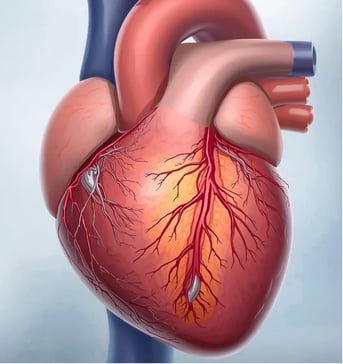
Cardiovascular ischemia occurs when the heart muscle does not receive enough oxygen-rich blood to meet its needs. This is usually caused by narrowed or blocked coronary arteries, but small vessel dysfunction can also be responsible.
When the heart is under-perfused, it becomes stressed and cannot function normally. Over time, this can weaken the heart, cause scar tissue, and lead to conditions like angina or ischemic cardiomyopathy.
Ischemia is a spectrum. Some people experience classic chest pressure during exertion. Others have silent or microvascular ischemia where symptoms are vague and standard tests appear normal. Either way, it signals that part of the heart is not getting the blood flow it needs.
Symptoms and the Lived Experience of Cardiovascular Ischemia
Cardiovascular ischemia can feel different for every person. Symptoms often appear during physical activity or stress, but they can also come and go unpredictably, or occur at rest. Some people feel classic chest discomfort. Others experience vague, persistent symptoms that are easy to dismiss.
Symptoms and the Lived Experience of Cardiovascular Ischemia
Cardiovascular ischemia can feel different for every person. Symptoms often appear during physical activity or stress, but they can also come and go unpredictably, or occur at rest. Some people feel classic chest discomfort. Others experience vague, persistent symptoms that are easy to dismiss.

Living with ischemia is exhausting. Episodes trigger fear, uncertainty, and frustration. Many patients feel dismissed when their symptoms don't match the classic pattern. Ischemia doesn't just affect the heart -- it affects confidence, mobility, relationships, and quality of life.
Why Cardiovascular Ischemia Happens
Why Cardiovascular Ischemia Happens
Atherosclerosis
Plaque made of cholesterol, calcium, and inflammatory cells builds up inside the coronary arteries, narrowing the vessel and limiting blood flow to the heart -- especially during exertion.
Microvascular Dysfunction
Some people experience ischemia even when larger arteries appear normal. The tiny vessels responsible for fine-tuned blood flow fail to dilate properly, leaving the heart under-perfused. More common in women and people with diabetes.
Endothelial Injury
The inner lining of blood vessels can be damaged by high blood pressure, smoking, high cholesterol, or chronic inflammation -- causing vessels to lose their ability to relax and deliver adequate blood flow.
Oxygen Demand Outpacing Supply
During exertion, stress, illness, or anemia, the heart works harder and needs more oxygen. If the vessels cannot increase flow to match that demand, even temporarily, ischemia can develop.
Progressive Tissue Damage
Repeated or prolonged ischemia weakens the heart muscle. Oxygen-deprived areas may develop scar tissue, reducing pumping efficiency and potentially leading to ischemic cardiomyopathy.
A Systemic Vascular Pattern
The same processes that restrict blood flow to the heart can affect the legs, brain, and other organs. Cardiovascular ischemia is rarely isolated, it often reflects a broader vascular condition.
Types of Cardiovascular Ischemia
Types of Cardiovascular Ischemia
Stable Angina
Predictable chest discomfort or shortness of breath triggered by exertion or stress and relieved by rest. Reflects a fixed narrowing in the coronary arteries that limits flow when the heart works harder.
Unstable Angina
Symptoms occur at rest, last longer, or feel more intense than usual. Often caused by plaque rupture or sudden arterial narrowing. Requires urgent medical evaluation -- it can precede a heart attack.
Microvascular Angina
Small vessels fail to dilate or regulate blood flow properly. Patients often have persistent symptoms despite normal angiograms or stress tests. More common in women and people with diabetes.
Silent Ischemia
No noticeable symptoms. Often discovered during routine testing or after a cardiac event. Despite the absence of discomfort, it can quietly weaken the heart over time.
Ischemic Cardiomyopathy
The advanced end of the spectrum. Repeated ischemia causes scar tissue to replace healthy muscle, reducing the heart's pumping ability. Symptoms include fatigue, shortness of breath, and swelling.
A Systemic Pattern
Cardiovascular ischemia rarely exists alone. If blood flow is compromised at the heart, the same underlying vascular disease may already be affecting the legs, the brain, or both. Recognizing this connection can help patients and clinicians see the full picture, not just one organ in isolation.
How Cardiovascular Ischemia Is Diagnosed
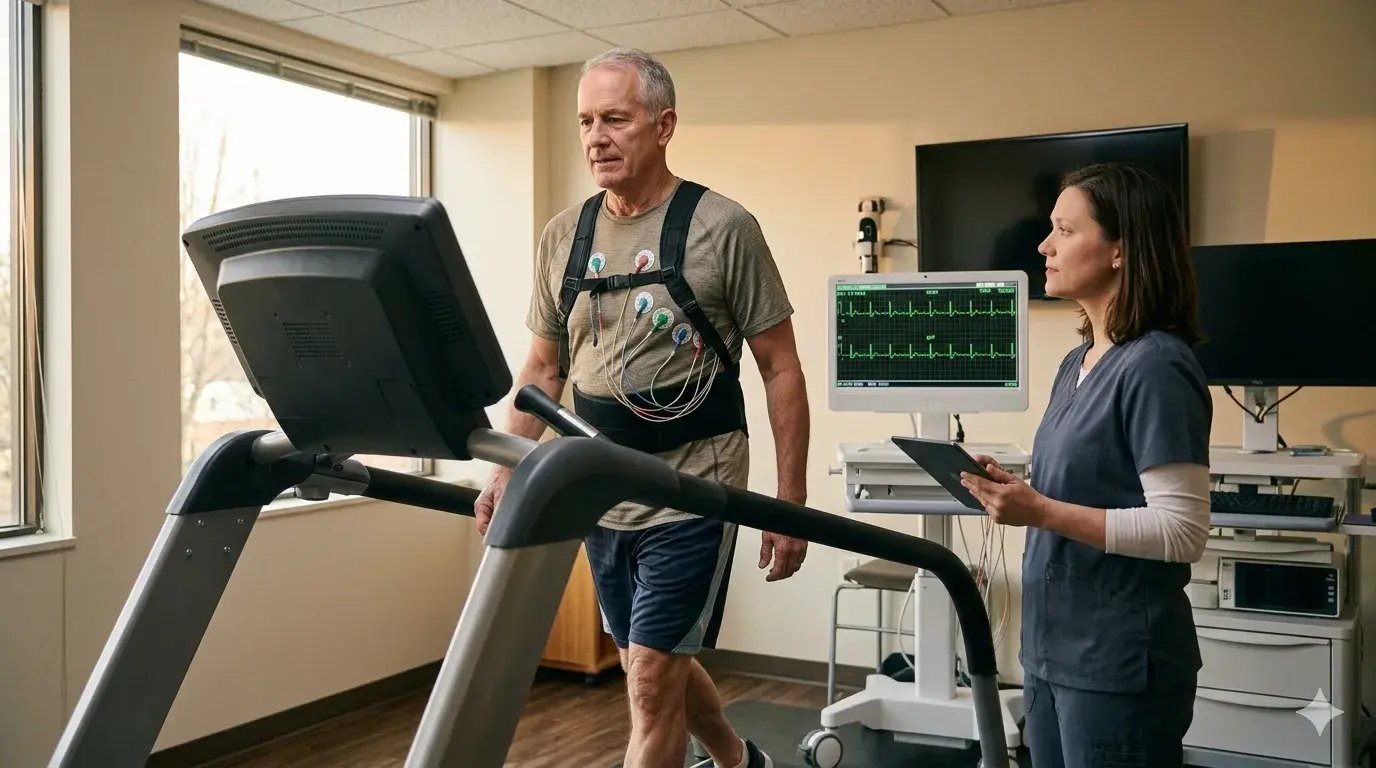
Diagnosing cardiovascular ischemia requires understanding how the heart is functioning, how well blood is flowing, and why symptoms are occurring. Because ischemia presents differently in every person, clinicians rely on a combination of detailed history, physical examination, and targeted testing to identify the underlying cause and guide next steps.
.webp?width=1408&height=768&name=ECG%20(2).webp "ECG (2)")
Clinical History and Symptom Review
The process begins with a detailed conversation about symptoms, triggers, and patterns, including chest discomfort with exertion, unusual fatigue, atypical symptoms like jaw pain or nausea, and episodes that feel "off" even when past tests were normal.
Electrocardiogram (ECG)
Records the heart's electrical activity and can reveal prior heart damage, signs of reduced blood flow, or abnormal rhythms. Some patients have normal ECGs even when ischemia is present, so additional testing is often needed.
Stress Testing
Evaluates how the heart performs under increased workload, through exercise or medication. Clinicians look for ECG changes, triggered symptoms, and imaging evidence of reduced blood flow that only appears under demand.
Echocardiogram
Uses ultrasound to assess heart structure, pumping function, and wall motion abnormalities that may indicate ischemia or scar tissue.
Coronary Imaging
May include CT angiography, invasive angiography, or advanced microvascular imaging to distinguish between large-artery blockages and small vessel dysfunction.
How Cardiovascular Ischemia Progresses
Over Time
Cardiovascular ischemia is not static. It evolves as blood flow becomes increasingly limited and the heart struggles to compensate. Understanding this progression helps patients recognize why symptoms change over time -- and why early evaluation matters.
Stage 1: Early Ischemia
Blood flow is reduced but the heart can still compensate. Symptoms appear only during exertion, chest pressure, shortness of breath, or unusual fatigue. Rest brings relief. Testing may show mild abnormalities or appear normal. Microvascular dysfunction may already be present.
Stage 2: Recurrent and Worsening Ischemia
Repeated episodes begin to stress and weaken the heart muscle. Symptoms appear with less activity, last longer, and fatigue becomes more persistent. This is often when patients start seeking answers, especially when symptoms don't match classic patterns.
Stage 3: Tissue Damage and Scar Formation
Prolonged inadequate blood flow causes permanent injury. Scar tissue replaces healthy muscle, ejection fraction may decline, and shortness of breath can occur even at rest. This marks the transition from episodic ischemia to structural heart disease.
Stage 4: Ischemic Cardiomyopathy
The heart's pumping ability is significantly impaired. Patients experience chronic fatigue, fluid retention, difficulty breathing when lying flat, and reduced stamina. Many feel dismissed because their symptoms don't fit the classic angina pattern.
Stage 5: No-Option Status
Some patients are not candidates for stents or bypass surgery due to diffuse disease, prior interventions, microvascular dysfunction, or surgical risk. Despite guideline-directed therapy, symptoms persist, leading many to explore investigational evaluation.
How Cardiovascular Ischemia Progresses Over Time
Cardiovascular ischemia is not static. It evolves as blood flow becomes increasingly limited and the heart struggles to compensate. Understanding this progression helps patients recognize why symptoms change over time -- and why early evaluation matters.
Stage 1: Early Ischemia
Blood flow is reduced but the heart can still compensate. Symptoms appear only during exertion, chest pressure, shortness of breath, or unusual fatigue. Rest brings relief. Testing may show mild abnormalities or appear normal. Microvascular dysfunction may already be present.
Stage 2: Recurrent and Worsening Ischemia
Repeated episodes begin to stress and weaken the heart muscle. Symptoms appear with less activity, last longer, and fatigue becomes more persistent. This is often when patients start seeking answers, especially when symptoms don't match classic patterns.
Stage 3: Tissue Damage and Scar Formation
Prolonged inadequate blood flow causes permanent injury. Scar tissue replaces healthy muscle, ejection fraction may decline, and shortness of breath can occur even at rest. This marks the transition from episodic ischemia to structural heart disease.
Stage 4: Ischemic Cardiomyopathy
The heart's pumping ability is significantly impaired. Patients experience chronic fatigue, fluid retention, difficulty breathing when lying flat, and reduced stamina. Many feel dismissed because their symptoms don't fit the classic angina pattern.
Stage 5: No-Option Status
Some patients are not candidates for stents or bypass surgery due to diffuse disease, prior interventions, microvascular dysfunction, or surgical risk. Despite guideline-directed therapy, symptoms persist, leading many to explore investigational evaluation.
Current Treatment for Cardiovascular Ischemia
Treatment focuses on restoring balance between the heart's oxygen supply and its workload, improving blood flow, reducing symptoms, preventing heart attacks, and protecting long-term heart function. Most patients move through a combination of the following approaches.
Current Treatment for Cardiovascular Ischemia
Treatment focuses on restoring balance between the heart's oxygen supply and its workload, improving blood flow, reducing symptoms, preventing heart attacks, and protecting long-term heart function. Most patients move through a combination of the following approaches.
Lifestyle Changes
Heart-healthy nutrition, regular physical activity, smoking cessation, weight management, and stress reduction. The foundation for every stage of ischemia - and the starting point for every treatment plan.
Risk Factor Control
Active management of blood pressure, cholesterol, and blood sugar. These systemic factors directly accelerate plaque buildup and vascular damage -- controlling them slows disease progression.
Medications
First-line treatment for most patients. Medications reduce the heart's workload, improve coronary blood flow, stabilize plaque, prevent clot formation, and support heart function in patients with reduced ejection fraction.
Stents (PCI)
When a specific blockage is identified, a minimally invasive procedure can open the artery and place a stent. Most effective when a limited number of accessible arteries are narrowed and symptoms correlate clearly with the affected area.
Bypass Surgery (CABG)
For patients with multiple blockages, complex anatomy, or severe disease where stents are no longer sufficient. Surgeons create new pathways for blood flow by rerouting vessels from elsewhere in the body, allowing blood to bypass damaged or blocked arteries entirely.
Cardiac Rehabilitation
Supervised exercise, education, and lifestyle support following a cardiac event or procedure. Improves stamina, reduces symptoms, supports emotional well-being, and lowers risk of future events.
Some patients continue experiencing symptoms despite medications, stents, or bypass surgery. Others are not candidates for revascularization due to diffuse disease, microvascular dysfunction, prior surgeries, or high surgical risk. These patients are often described as having "no-option" ischemia, and for them, investigational clinical research may be the next step worth exploring.
When Patients Explore Investigational Options

Hemostemix evaluates certain patients under investigational protocols involving ACP-01, an autologous cell product derived from a patient's own blood, being studied for its potential to support blood vessel growth and improve tissue perfusion in ischemic areas.
Hemostemix's Investigational Approach
Hemostemix evaluates certain patients with ischemic conditions under regulated research protocols studying whether ACP-01, an autologous angiogenic cell product, may support blood flow in areas affected by reduced circulation. This is investigational. It has not been approved by the FDA, does not replace standard medical care, and requires meeting specific eligibility criteria.
Hemostemix's Investigational Approach
Hemostemix evaluates certain patients with ischemic conditions under regulated research protocols studying whether ACP-01, an autologous angiogenic cell product, may support blood flow in areas affected by reduced circulation. This is investigational. It has not been approved by the FDA, does not replace standard medical care, and requires meeting specific eligibility criteria.
What ACP-01 Is
ACP-01 consists of angiogenic cell precursors derived from a patient's own blood, prepared in a controlled laboratory environment. Because the cells are autologous, there is no risk of immune rejection. They are being studied for their potential to support vascular repair in ischemic tissue.
How It Works
The process involves a standard blood draw, laboratory isolation and preparation of the angiogenic precursor cells, and reinjection into the area of ischemia using catheter-based techniques. No general anesthesia is required and most patients return to normal activities shortly after.
What It Is and What It Isn't
ACP-01 is not an approved treatment, not a replacement for ongoing medical care, and does not guarantee specific outcomes. It is a structured, science-driven pathway for patients who have exhausted standard options and want to understand whether research participation may be appropriate for their clinical profile.
Schedule A Consultation
Schedule A Consultation
If you have been diagnosed with an advanced vascular or ischemic condition and are exploring investigational clinical research options, you may request a consultation to determine whether further review is appropriate.
Frequently Asked Questions
What is the difference between PAD and CLTI?
Peripheral arterial disease (PAD) refers broadly to arterial narrowing in the legs and feet. CLTI is the most advanced stage of PAD -- defined by critically reduced blood flow that causes rest pain, non-healing wounds, or tissue loss. Not everyone with PAD develops CLTI, but CLTI always involves underlying PAD.
What causes cardiovascular ischemia?
The most common cause is atherosclerosis, which leads to plaque buildup in coronary arteries. Other contributing factors may include microvascular dysfunction, endothelial dysfunction, and coronary artery spasm.
Why do my tests come back “normal” if I still have symptoms?
Some people have ischemia caused by dysfunction in the small vessels of the heart rather than blockages in the major arteries. Standard tests are designed to detect large‑vessel disease, so microvascular ischemia can be harder to identify. Persistent symptoms should always be discussed with a qualified healthcare professional, even if prior tests were normal.
Can ischemia get better?
Ischemia can improve with lifestyle changes, medications, and procedures that restore blood flow. In some cases, the body forms natural collateral vessels that help supply blood to affected areas. Long‑term improvement depends on the underlying cause, how early it’s addressed, and how the heart responds over time. A clinician can help determine the best approach for your situation.
What does “no‑option” ischemia mean?
“No‑option” ischemia refers to cases where standard treatments, such as stents or bypass surgery, are not possible or no longer effective. This may occur when the disease is too diffuse, the vessels are too small, or prior procedures limit what can safely be done. People in this category often continue to work closely with their healthcare team to manage symptoms and explore whether investigational evaluation may be appropriate.
What is ejection fraction (EF), and why does it matter?
Ejection fraction measures how much blood the heart pumps out with each beat. A normal EF is generally above 50 percent. Lower values can indicate weakened heart muscle, often from repeated or prolonged ischemia. EF helps clinicians understand how well the heart is functioning and guides decisions about treatment and monitoring.
Is microvascular ischemia dangerous?
Microvascular ischemia can significantly affect quality of life and may contribute to long‑term heart dysfunction if not recognized. It often presents with persistent symptoms despite “normal” imaging. Because it behaves differently from large‑vessel disease, it requires careful evaluation by a qualified healthcare professional.
How does ischemia lead to heart failure?
When parts of the heart repeatedly receive too little blood, the muscle becomes stressed and may develop scar tissue. Over time, this reduces the heart’s ability to pump effectively, leading to ischemic cardiomyopathy. Symptoms may include fatigue, shortness of breath, swelling, or reduced exercise tolerance. Early evaluation and treatment can help slow this progression.
When should someone consider investigational evaluation?
People may explore investigational evaluation when they continue to experience symptoms despite standard therapy, when they are not candidates for additional procedures, or when they have been told they have “no options.” This process is not a replacement for medical care and does not guarantee specific outcomes. It is a structured way to determine whether participation in a research study may be appropriate.
Is ACP‑01 an approved treatment?
No. ACP‑01 is investigational and has not been approved by the U.S. Food and Drug Administration. It is studied under regulated research protocols and is not intended to replace standard medical care. Anyone considering investigational evaluation should discuss their symptoms and medical history with a qualified healthcare professional.
Disclaimer