---
title: Peripheral Arterial Disease (PAD) and Peripheral Ischemia
---
[](https://hemostemix.com?hsLang=en)
- [Patient Information](https://hemostemix.com/investigational-treatment-options)
- [Physician Information](https://hemostemix.com/physicians)
- ACP-01
Show submenu for ACP-01
- [ACP-01](https://hemostemix.com/acp-autologous-stem-cell-therapy)
- [Clinical Research](https://hemostemix.com/clinical-research)
- Conditions
Show submenu for Conditions
- [Cardiovascular Ischemia & Angina](https://hemostemix.com/cardiovascular-ischemia-angina)
- [Chronic Limb Ischemia - CLTI](https://hemostemix.com/chronic-limb-threatening-ischemia)
- [Peripheral Arterial Disease- PAD](https://hemostemix.com/peripheral-arterial-disease-pad-and-peripheral-ischemia)
- [Vascular Dementia](https://hemostemix.com/vascular-dementia)
- [Wound Care](https://hemostemix.com/wound-care)
- [Chronic Neuropathic and Ischemic Pain](https://hemostemix.com/chronic-neuropathic-and-ischemic-pain)
- [Events & Replays](https://hemostemix.com/events)
- Blog
Show submenu for Blog
- [Hemostemix Health Hub](https://hemostemix.com/health-hub-blog)
- [Hemostemix Video Library](https://hemostemix.com/videolibrary)
- [About](https://hemostemix.com/about)
- [Patient Information](https://hemostemix.com/investigational-treatment-options)
- [Physician Information](https://hemostemix.com/physicians)
- ACP-01
Show submenu for ACP-01
- [ACP-01](https://hemostemix.com/acp-autologous-stem-cell-therapy)
- [Clinical Research](https://hemostemix.com/clinical-research)
- Conditions
Show submenu for Conditions
- [Cardiovascular Ischemia & Angina](https://hemostemix.com/cardiovascular-ischemia-angina)
- [Chronic Limb Ischemia - CLTI](https://hemostemix.com/chronic-limb-threatening-ischemia)
- [Peripheral Arterial Disease- PAD](https://hemostemix.com/peripheral-arterial-disease-pad-and-peripheral-ischemia)
- [Vascular Dementia](https://hemostemix.com/vascular-dementia)
- [Wound Care](https://hemostemix.com/wound-care)
- [Chronic Neuropathic and Ischemic Pain](https://hemostemix.com/chronic-neuropathic-and-ischemic-pain)
- [Events & Replays](https://hemostemix.com/events)
- Blog
Show submenu for Blog
- [Hemostemix Health Hub](https://hemostemix.com/health-hub-blog)
- [Hemostemix Video Library](https://hemostemix.com/videolibrary)
- [About](https://hemostemix.com/about)


[Investor Site](https://investors.hemostemix.com/?hsLang=en)
# Peripheral Arterial Disease (PAD) and Peripheral Ischemia
Peripheral arterial disease is a vascular condition caused by reduced blood flow to the legs due to arterial narrowing or obstruction. PAD may lead to claudication, impaired wound healing, and advanced ischemic complications. Learn about symptoms, diagnosis, standard management, and ongoing investigational clinical research.
## **Peripheral Arterial Disease:**
## **What It Is and Why It Matters**
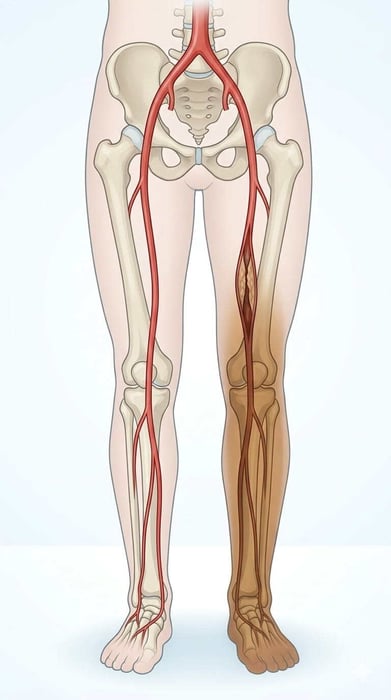
Peripheral arterial disease (PAD) is a circulatory condition in which narrowed or blocked arteries reduce blood flow to the legs and feet. It is caused by atherosclerosis, the same process of plaque buildup that affects the heart and brain, and it affects millions of people, many of whom don't know they have it.
When the arteries supplying the legs become narrowed, the muscles and tissues downstream don't receive enough oxygen to function normally. In the early stages this shows up as leg pain or cramping during walking that goes away with rest. As the disease progresses, symptoms become more persistent, wounds stop healing, and the risk of serious complications, including limb loss, increases significantly.
PAD is not just a leg problem. It is a warning sign of systemic vascular disease. People diagnosed with PAD have a significantly elevated risk of heart attack, stroke, and other cardiovascular events because the same arterial disease affecting their legs is almost certainly present elsewhere in their body.
The good news is that PAD is manageable, especially when caught early. Understanding what it is, how it progresses, and what options exist puts patients in a far stronger position to protect both their limbs and their overall vascular health.
## **Symptoms and the Lived Experience of Peripheral Arterial Disease**
PAD has a way of sneaking up on people. The earliest symptoms are easy to dismiss: a little leg heaviness after a long walk, some calf cramping that goes away after a few minutes of rest. Many people assume it's just aging, or being out of shape, or an old injury acting up. By the time a PAD diagnosis is made, the disease has often been progressing quietly for years.
**Common symptoms include:**
Cramping, aching, or fatigue in the calves, thighs, or buttocks during walking or climbing stairs
Pain or discomfort that disappears within a few minutes of rest
Legs or feet that feel cold, numb, or heavy, especially compared to the other side
Skin on the lower leg or foot that appears pale, bluish, or shiny
Leg hair that has thinned or stopped growing
Toenails that grow slowly or have changed in texture
Wounds or sores on the feet or toes that are slow to heal or don't heal at all
Weak or absent pulse in the foot or ankle

The pattern of pain that comes with walking and resolves with rest, called intermittent claudication, is the hallmark of early to moderate PAD. But not everyone experiences it. A significant number of people with PAD have no leg pain at all, which is why the disease is so frequently undiagnosed until it has already advanced.
Living with PAD changes how people move through the world. Patients begin avoiding hills, stairs, and distances they once managed easily. They stop walking the dog, skip the grocery store, decline invitations. The gradual shrinking of daily life often happens so slowly that patients don't connect it to a vascular condition; they just think they're getting older. That delay in recognition is one of the most important reasons PAD tends to progress further than it should before anyone intervenes.
For patients who do experience leg pain, the unpredictability is its own burden. Planning a walk, a shopping trip, or a family outing around how far the legs will cooperate becomes exhausting. And for those whose PAD has progressed to wounds that won't heal, the anxiety of watching the skin break down despite careful wound care is relentless.
## **Why Peripheral Arterial Disease Happens**
PAD develops when the arteries supplying the legs and feet become narrowed or blocked, reducing the oxygen and nutrients available to the tissues they serve. This is almost always a gradual process driven by a combination of risk factors that damage blood vessels over time. Understanding what causes PAD helps patients recognize why it developed and what can be done to slow its progression.
## **Why Peripheral Arterial Disease Happens**
PAD develops when the arteries supplying the legs and feet become narrowed or blocked, reducing the oxygen and nutrients available to the tissues they serve. This is almost always a gradual process driven by a combination of risk factors that damage blood vessels over time. Understanding what causes PAD helps patients recognize why it developed and what can be done to slow its progression.
###### Atherosclerosis
The primary driver of PAD. Plaque made of cholesterol, calcium, and inflammatory cells builds up inside the arterial walls, progressively narrowing the vessel and reducing blood flow to the legs and feet. The same process occurs in the arteries of the heart and brain.
###### Diabetes
Diabetes accelerates arterial disease, damages the small vessels that deliver oxygen directly to tissue, and impairs the body's ability to heal wounds and fight infection. People with diabetes are significantly more likely to develop PAD and are at higher risk of progression to advanced stages.
###### Smoking
One of the strongest modifiable risk factors for PAD. Smoking damages the endothelium, promotes plaque formation, causes arteries to constrict, and dramatically accelerates disease progression. People who smoke are far more likely to develop PAD at a younger age and experience faster deterioration.
###### Hypertension
Chronic high blood pressure damages the inner lining of blood vessels and increases the mechanical stress on arterial walls, accelerating plaque formation and arterial stiffening throughout the body, including the peripheral arteries.
###### High Cholesterol
Elevated LDL cholesterol is a primary contributor to plaque buildup inside arterial walls. Over time this narrows the vessel, reduces blood flow, and increases the risk of plaque instability and sudden arterial obstruction.
###### A Systemic Vascular Pattern
PAD rarely exists in isolation. The same risk factors and arterial disease processes that affect the legs are almost always present in the coronary and cerebrovascular circulation. A PAD diagnosis should prompt comprehensive cardiovascular evaluation, not just management of leg symptoms.
## **Types and Stages of Peripheral Arterial Disease**
PAD is not a single presentation. It exists across a spectrum of severity, from mild arterial narrowing with no symptoms to advanced disease that threatens the limb. Understanding where a patient falls on this spectrum directly shapes how the condition is managed, monitored, and treated.
## **Types and Stages of Peripheral Arterial Disease**
PAD is not a single presentation. It exists across a spectrum of severity, from mild arterial narrowing with no symptoms to advanced disease that threatens the limb. Understanding where a patient falls on this spectrum directly shapes how the condition is managed, monitored, and treated.
###### Asymptomatic PAD
Arterial narrowing is present but the body is still compensating adequately. Many people with PAD have no symptoms at all, particularly in early stages. The disease is often discovered incidentally during cardiovascular screening or an ABI test ordered for another reason. Asymptomatic PAD still carries elevated cardiovascular risk and requires active risk factor management.
###### Intermittent Claudication
The most recognized presentation of PAD. Cramping, aching, or fatigue in the calves, thighs, or buttocks that appears predictably during walking or exertion and resolves within minutes of rest. Claudication reflects a blood flow deficit that emerges under demand but is still adequate at rest. Many patients live with claudication for years before seeking evaluation.
###### Atypical Leg Symptoms
A significant number of PAD patients experience leg discomfort that does not fit the classic claudication pattern. Symptoms may be vague, positional, or inconsistent. These patients are frequently misdiagnosed or dismissed, particularly when standard tests appear borderline. Atypical presentation is more common in women, older adults, and people with diabetes.
###### Ischemic Rest Pain
Blood flow can no longer meet baseline tissue demands. Pain occurs without any physical activity, most commonly in the foot or toes, and is often worst at night. This marks the transition from moderate PAD into the territory of chronic limb threatening ischemia and requires urgent vascular evaluation.
###### Non-Healing Wounds and Ulceration
Tissue oxygen levels have dropped below the threshold needed for normal cellular repair. Wounds, sores, or ulcers develop on the feet, toes, or heels and fail to respond to standard wound care. This stage carries a high risk of infection and progressive tissue loss without restored blood flow.
###### Chronic Limb Threatening Ischemia
The most advanced and dangerous stage of PAD. Critically reduced blood flow puts the limb itself at risk of loss. CLTI is defined by persistent ischemia at rest, non-healing wounds, or tissue death and requires immediate specialist evaluation. Patients who reach this stage without revascularization options may be candidates for investigational research.
## **How Peripheral Arterial Disease Is Diagnosed**
Diagnosing PAD requires confirming that blood flow to the legs and feet is reduced and understanding how severe that reduction is. Because PAD can present without classic symptoms, and because early detection significantly improves outcomes, clinicians use a combination of physical examination, hemodynamic testing, and imaging to build a complete picture of the disease.
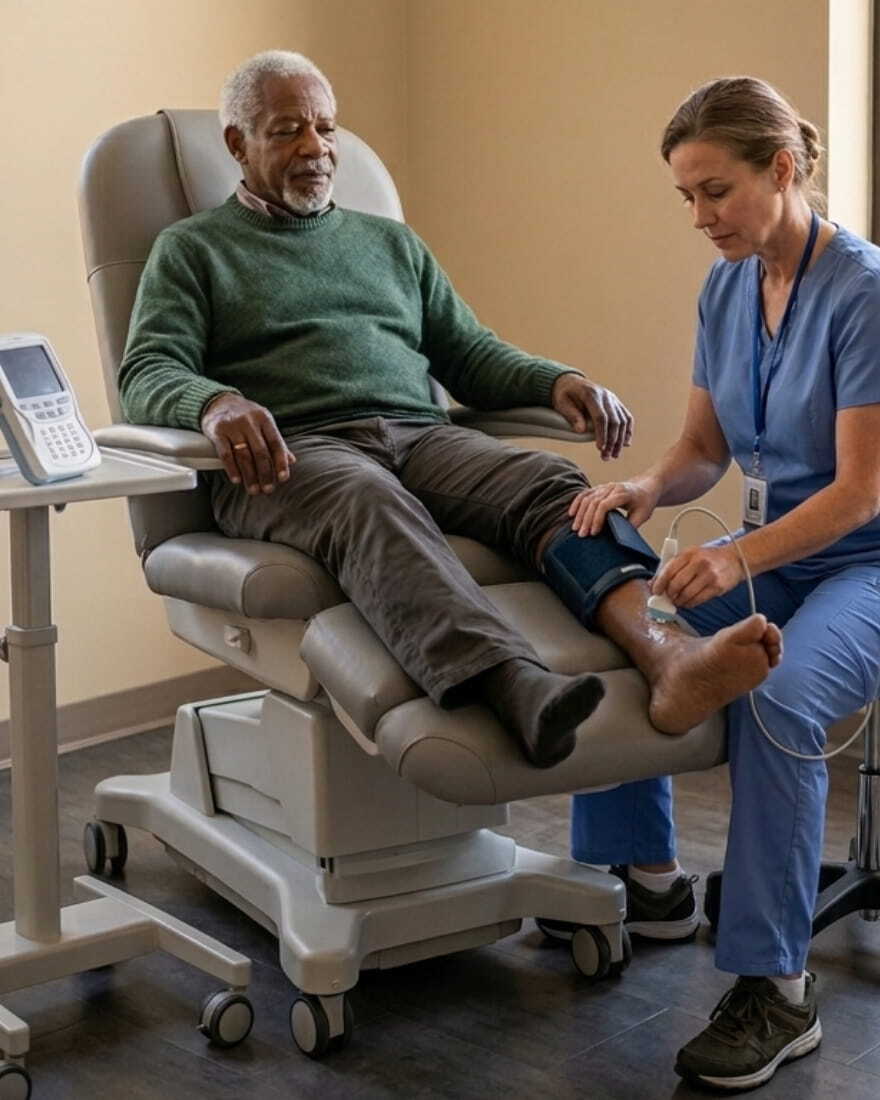

Clinical History and Symptom Review
The diagnostic process begins with a detailed conversation about leg pain patterns, walking distance, wound history, and cardiovascular risk factors. Clinicians listen for the classic pattern of exertional pain that resolves with rest, but also for atypical presentations that may indicate PAD in patients who do not fit the textbook description. A thorough history often reveals disease that standard screening would miss.
Ankle-Brachial Index (ABI)
The most widely used initial test for PAD. It compares blood pressure measured at the ankle to blood pressure measured at the arm. A reduced ratio indicates impaired peripheral perfusion. The ABI is non-invasive, inexpensive, and can be performed in a primary care or vascular office setting. It is often the first test that confirms a PAD diagnosis.
Toe Brachial Index (TBI)
In patients with diabetes or heavily calcified vessels, the ABI may give falsely normal readings. Toe pressure measurements provide a more accurate assessment of distal blood flow in these patients and are essential for avoiding missed diagnoses in high-risk populations.
Duplex Ultrasonography
Uses sound waves to visualize blood flow patterns and identify the location and severity of arterial narrowing or blockage. Non-invasive, widely available, and often used as the next step after an abnormal ABI to map the distribution of disease before planning treatment.
CT or MR Angiography
Provides detailed anatomical mapping of the arterial system from the aorta to the foot. Essential for understanding the full extent of disease and determining whether endovascular intervention or surgical bypass is technically feasible.
Conventional Angiography
The gold standard for precise anatomical assessment. Used when revascularization is being actively planned and detailed visualization of vessel anatomy is required. Can be combined with endovascular treatment in a single procedure.
## **How Peripheral Arterial Disease**
## **Progresses Over Time**
PAD is a progressive condition. Without active management of the underlying vascular disease, arterial narrowing continues, blood flow decreases, and symptoms worsen over time. Understanding this progression helps patients recognize where they are in the disease course, why symptoms are changing, and why early intervention matters before the disease reaches its most dangerous stages.
**Stage 1: Silent PAD**
Arterial narrowing is present but the body is compensating. There are no noticeable symptoms. Many people are at this stage for years without knowing it. PAD at this stage is often discovered through routine cardiovascular screening or incidental ABI testing. Risk factor management here has the greatest potential to slow or halt progression.
**Stage 2: Intermittent Claudication**
Blood flow is insufficient during exertion but still adequate at rest. Walking triggers cramping, aching, or fatigue in the calves, thighs, or buttocks that resolves within minutes of stopping. This is the stage most people associate with PAD and the point at which many patients first seek evaluation. Supervised exercise therapy and medication can significantly improve walking distance and quality of life at this stage.
**Stage 3: Worsening Claudication and Functional Decline**
Symptoms begin appearing with less activity. Walking distances shorten. Daily tasks become more difficult. Patients start avoiding stairs, hills, and distances they previously managed without difficulty. This gradual functional decline is often mistaken for normal aging. Vascular evaluation at this stage is important to assess disease progression and revascularization options before the condition advances further.
**Stage 4: Ischemic Rest Pain**
Blood flow can no longer meet baseline tissue demands even without physical activity. Pain occurs at rest, most commonly in the foot or toes, and is often worst at night. Patients may instinctively dangle their foot off the bed for relief. This marks the transition from PAD into chronic limb threatening ischemia and requires urgent specialist evaluation. Time matters at this stage.
**Stage 5: Tissue Loss, Non-Healing Wounds, and Limb Threat**
Oxygen deprivation has progressed to the point where the skin and underlying tissue can no longer sustain themselves. Wounds develop on pressure points and fail to heal despite appropriate wound care. Infection risk is high. Tissue death can progress rapidly. This is the most advanced and dangerous stage of PAD and represents a vascular emergency. Patients who cannot be revascularized at this stage face the highest risk of major amputation and are most likely to benefit from investigational evaluation.
## **How Peripheral Arterial Disease Progresses Over Time**
PAD is a progressive condition. Without active management of the underlying vascular disease, arterial narrowing continues, blood flow decreases, and symptoms worsen over time. Understanding this progression helps patients recognize where they are in the disease course, why symptoms are changing, and why early intervention matters before the disease reaches its most dangerous stages.
**Stage 1: Silent PAD**
Arterial narrowing is present but the body is compensating. There are no noticeable symptoms. Many people are at this stage for years without knowing it. PAD at this stage is often discovered through routine cardiovascular screening or incidental ABI testing. Risk factor management here has the greatest potential to slow or halt progression.
**Stage 2: Intermittent Claudication**
Blood flow is insufficient during exertion but still adequate at rest. Walking triggers cramping, aching, or fatigue in the calves, thighs, or buttocks that resolves within minutes of stopping. This is the stage most people associate with PAD and the point at which many patients first seek evaluation. Supervised exercise therapy and medication can significantly improve walking distance and quality of life at this stage.
**Stage 3: Worsening Claudication and Functional Decline**
Symptoms begin appearing with less activity. Walking distances shorten. Daily tasks become more difficult. Patients start avoiding stairs, hills, and distances they previously managed without difficulty. This gradual functional decline is often mistaken for normal aging. Vascular evaluation at this stage is important to assess disease progression and revascularization options before the condition advances further.
**Stage 4: Ischemic Rest Pain**
Blood flow can no longer meet baseline tissue demands even without physical activity. Pain occurs at rest, most commonly in the foot or toes, and is often worst at night. Patients may instinctively dangle their foot off the bed for relief. This marks the transition from PAD into chronic limb threatening ischemia and requires urgent specialist evaluation. Time matters at this stage.
**Stage 5: Tissue Loss, Non-Healing Wounds, and Limb Threat**
Oxygen deprivation has progressed to the point where the skin and underlying tissue can no longer sustain themselves. Wounds develop on pressure points and fail to heal despite appropriate wound care. Infection risk is high. Tissue death can progress rapidly. This is the most advanced and dangerous stage of PAD and represents a vascular emergency. Patients who cannot be revascularized at this stage face the highest risk of major amputation and are most likely to benefit from investigational evaluation.
## **Current Treatment for Peripheral Arterial Disease**
Treatment for PAD focuses on improving blood flow, reducing symptoms, preventing progression, and managing the systemic cardiovascular risk that accompanies arterial disease throughout the body. The right approach depends on the stage of disease, the anatomy of the arterial blockages, and the overall health of the patient. Most people with PAD move through a combination of lifestyle changes, medications, and procedures over time.
Lifestyle Changes
The foundation of PAD management at every stage. Smoking cessation is the single most impactful change a PAD patient can make. Combined with heart healthy nutrition, weight management, and stress reduction, lifestyle changes slow plaque progression and reduce overall vascular risk.
Risk Factor Control
Active management of blood pressure, cholesterol, and blood sugar directly slows the arterial disease driving PAD. In diabetic patients, tight glycemic control is especially critical; uncontrolled diabetes dramatically accelerates both large and small vessel damage throughout the extremities.
Medications
Antiplatelet therapy, statins, and medications that improve circulation are standard for most PAD patients. These drugs reduce the risk of cardiovascular events, stabilize plaque, and in some cases improve walking distance and symptom burden.
Supervised Exercise Therapy
Structured walking programs under clinical supervision are one of the most effective treatments for intermittent claudication. Regular exercise stimulates the development of collateral circulation and significantly improves walking distance, functional capacity, and quality of life.
Endovascular Intervention
When symptoms are severe or disease is progressing, minimally invasive procedures including balloon angioplasty and stenting can open narrowed or blocked arteries and restore blood flow. Most effective when disease is localized and vessels are suitable for catheter based treatment.
Surgical Bypass
For patients with complex, multilevel, or diffuse disease not suitable for endovascular treatment, bypass surgery creates a new pathway for blood to reach the lower leg and foot. Requires a suitable inflow vessel and an accessible target vessel below the blockage.
Some PAD patients continue to experience progressive symptoms despite medications, exercise therapy, and revascularization procedures. Others develop disease that is too diffuse, too calcified, or too anatomically complex for further intervention. When standard options have been exhausted and symptoms continue to worsen, investigational clinical research may represent the most meaningful pathway still available. For patients approaching or already in the territory of chronic limb threatening ischemia with no revascularization options, early investigational evaluation may be the difference between limb preservation and amputation.
## When Standard Options Are No Longer Enough
For some PAD patients, the disease reaches a point where standard interventions can no longer keep pace. Arteries that were treated with stents develop new blockages. Bypass grafts stop functioning. Disease spreads to vessels that cannot be safely reached. Medications manage risk but cannot restore blood flow to tissue that is already starving for oxygen.
When a vascular specialist says there is nothing left to offer, it is one of the most frightening things a patient can hear. Especially when symptoms are still present. Especially when a wound is not healing. Especially when amputation is starting to come up in conversations.
That is exactly the patient population that investigational clinical research is designed for.
## When Standard Options Are No Longer Enough
For some PAD patients, the disease reaches a point where standard interventions can no longer keep pace. Arteries that were treated with stents develop new blockages. Bypass grafts stop functioning. Disease spreads to vessels that cannot be safely reached. Medications manage risk but cannot restore blood flow to tissue that is already starving for oxygen.
When a vascular specialist says there is nothing left to offer, it is one of the most frightening things a patient can hear. Especially when symptoms are still present. Especially when a wound is not healing. Especially when amputation is starting to come up in conversations.
That is exactly the patient population that investigational clinical research is designed for.
**Why Patients Begin Looking Further**
People with PAD may explore investigational options when claudication has progressed despite supervised exercise and medication; revascularization procedures have been performed but symptoms have returned or worsened; imaging shows diffuse or multilevel disease that cannot be safely treated; rest pain has developed and the disease is transitioning toward chronic limb threatening ischemia; or a vascular specialist has indicated that no further intervention is possible.
This is not a moment of giving up. It is a moment of looking further. Many patients describe a combination of fear, frustration, and determination at this stage. They have done everything asked of them. They have taken the medications, attended the appointments, followed the wound care protocols. And the disease has continued anyway. Seeking investigational evaluation is an informed, proactive decision, not a last resort born of desperation.
**What Investigational Evaluation Involves**
Investigational evaluation is a structured clinical review under regulated research protocols. It begins with a thorough assessment of medical history, prior imaging, current symptoms, and functional status to determine whether a patient meets eligibility criteria for a research study.

Hemostemix evaluates certain PAD patients under investigational protocols involving ACP-01, an autologous cell product derived from a patient's own blood being studied for its potential to support blood vessel growth and improve tissue perfusion in areas affected by peripheral ischemia.
## **Hemostemix's Investigational Approach**
Hemostemix evaluates certain patients with peripheral arterial disease under regulated research protocols studying whether ACP-01, an autologous angiogenic cell product, may support blood flow in areas affected by peripheral ischemia. This is investigational. It has not been approved by the FDA, does not replace standard medical care, and requires meeting specific eligibility criteria.
## **Hemostemix's Investigational Approach**
Hemostemix evaluates certain patients with peripheral arterial disease under regulated research protocols studying whether ACP-01, an autologous angiogenic cell product, may support blood flow in areas affected by peripheral ischemia. This is investigational. It has not been approved by the FDA, does not replace standard medical care, and requires meeting specific eligibility criteria.
###### What ACP-01 Is
ACP-01 consists of angiogenic cell precursors derived from a patient's own blood, prepared in a controlled laboratory environment. Because the cells are autologous, there is no risk of immune rejection. They are being studied for their potential to support vascular repair and improve tissue perfusion in legs and feet affected by peripheral arterial disease.
###### How It Works
The process involves a standard blood draw, laboratory isolation and preparation of the angiogenic precursor cells, and reinjection into the area of ischemia using catheter-based techniques. No general anesthesia is required and most patients return to normal activities shortly after.
###### What It Is and What It Isn't
ACP-01 is not an approved treatment, not a replacement for ongoing medical care, and does not guarantee specific outcomes. It is a structured, science driven pathway for PAD patients who have exhausted standard options and want to understand whether research participation may be appropriate for their clinical profile.
If you have been diagnosed with peripheral arterial disease and continue to experience symptoms despite standard treatment, or have been told that further revascularization is not possible, a clinical evaluation with Hemostemix may help determine whether investigational research is an appropriate next step for your situation. Our team reviews each case individually and is committed to honest, transparent communication about what this process involves and what it does not.
## **Schedule A Consultation**
## **Schedule A Consultation**
If you have been diagnosed with an advanced vascular or ischemic condition and are exploring investigational clinical research options, you may request a consultation to determine whether further review is appropriate.
Schedule a Consultation
## **Frequently Asked Questions**
###### What is peripheral arterial disease?
Peripheral arterial disease is a circulatory condition in which narrowed or blocked arteries reduce blood flow to the legs and feet. It is most commonly caused by atherosclerosis, the same plaque buildup process that affects the arteries of the heart and brain. PAD affects millions of people and is frequently underdiagnosed because many patients have no classic symptoms. .
###### What are the early warning signs of PAD?
The most common early symptom is intermittent claudication, cramping, aching, or fatigue in the calves, thighs, or buttocks during walking that resolves within minutes of rest. Other early signs include legs or feet that feel cold or numb, skin changes on the lower leg or foot, and slow growing or thickened toenails. Many people with PAD have no symptoms at all in early stages.
###### How is PAD different from CLTI?
PAD is the broader condition describing arterial narrowing in the legs and feet across a spectrum of severity. Chronic limb threatening ischemia is the most advanced and dangerous stage of PAD, defined by critically reduced blood flow that causes rest pain, non-healing wounds, or tissue death. Not everyone with PAD develops CLTI, but all CLTI patients have underlying PAD.
###### Is PAD dangerous?
Yes. PAD is a serious condition that carries significant risk beyond the legs. People with PAD have a substantially elevated risk of heart attack, stroke, and cardiovascular death because the same arterial disease affecting the legs is almost always present in the coronary and cerebrovascular circulation. PAD is also the leading pathway to major lower limb amputation when it progresses to advanced stages without adequate management.
###### Can PAD be reversed?
The arterial damage caused by atherosclerosis cannot be fully reversed, but progression can be significantly slowed through aggressive risk factor management. Revascularization procedures can restore blood flow through blocked arteries and dramatically improve symptoms and limb outcomes. Early detection and consistent management are the most important factors in long term outcomes.
###### What happens if PAD is left untreated?
Without treatment, PAD typically progresses. Symptoms worsen, walking distances shorten, and the risk of advancing to chronic limb threatening ischemia increases. In advanced stages, non-healing wounds, tissue loss, and major amputation become real risks. PAD is also associated with elevated cardiovascular mortality, making systemic management essential even when leg symptoms are mild.
###### Who is most at risk for PAD?
People over 50 with a history of smoking, diabetes, high blood pressure, high cholesterol, or a family history of cardiovascular disease are at highest risk. Diabetes and smoking are the two strongest individual risk factors. Anyone in a high-risk category should discuss PAD screening with their physician, particularly if they have noticed any changes in leg comfort during walking.
###### Is ACP-01 approved for PAD?
No. ACP-01 is investigational and has not been approved by the U.S. Food and Drug Administration. It is being evaluated in structured clinical research programs for patients with ischemic conditions including peripheral arterial disease.
###### How do I find out if I qualify for investigational evaluation?
Contact Hemostemix directly to request a clinical consultation. Our team will review your medical history, prior imaging, and current symptoms to determine whether further evaluation is appropriate for your situation.
Disclaimer
IMPORTANT NOTICE
ACP-01 is an investigational therapy and has not been approved by the U.S. Food and Drug Administration. Information provided on this website is for educational purposes only and does not constitute medical advice. Nothing on this site is intended to promote or market an unapproved therapy. Patients should consult a qualified healthcare professional regarding diagnosis and treatment decisions.
FLORIDA NOTICE
This notice is provided in accordance with Florida law. One or more physicians referenced may perform stem cell therapies that have not been approved by the United States Food and Drug Administration. Patients are encouraged to consult with their primary care provider before undergoing any stem cell therapy.
[](https://hemostemix.com?hsLang=en)
Leave us a message
Follow Us
Copyright © 2026 Hemostemix, Inc
[Privacy Policy |](https://hemostemix.com/privacy-policy?hsLang=en) [Terms of Service](https://hemostemix.com/sms-terms-of-service?hsLang=en)